Introduction
Cats are wonderful companions, but keeping them healthy requires attention to their everyday nutrition. One common question among cat owners in the USA is whether wet food or dry food is better.
Both options have advantages, and the right choice depends on your cat’s individual nutritional needs, preferences, and health condition.
Let’s explore the differences.
1. Understanding Dry Cat Food
Dry cat food, commonly called kibble, is popular because it is convenient and easy to store.
Benefits include:
- Easy portion measurement.
- Convenient storage.
- Longer shelf life before opening.
- Suitable for many feeding toys.
- Available in different life-stage formulas.
Always provide fresh drinking water because dry food contains relatively little moisture.
2. Understanding Wet Cat Food
Wet cat food is commonly sold in cans, trays, and pouches.
Its biggest nutritional advantage for many cats is its higher moisture content.
Other benefits include:
- Soft texture.
- Different flavors and aromas.
- Convenient individual portions.
- Options for cats that prefer moist food.
After opening, refrigerate unused portions according to package instructions.
3. Can Cats Eat Both Wet and Dry Food?
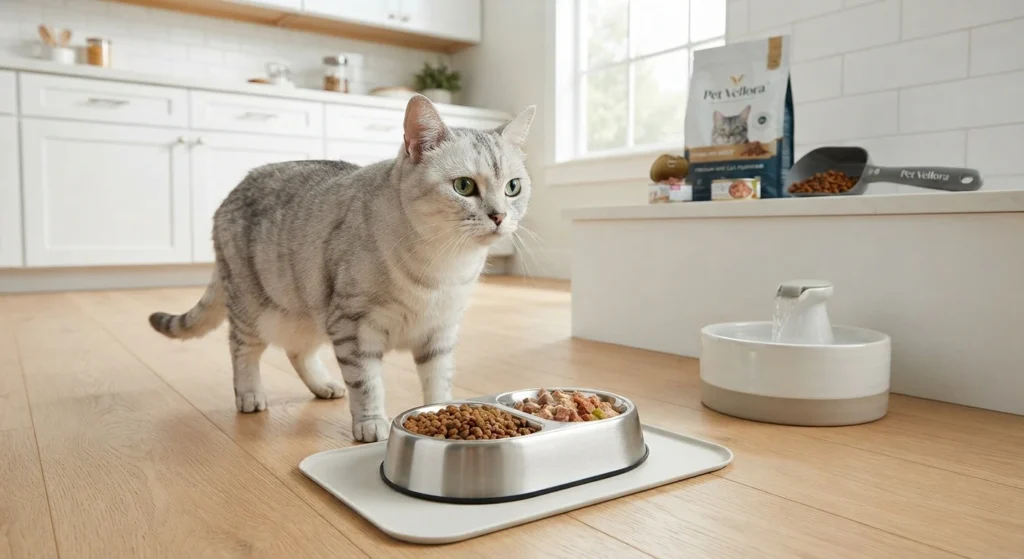
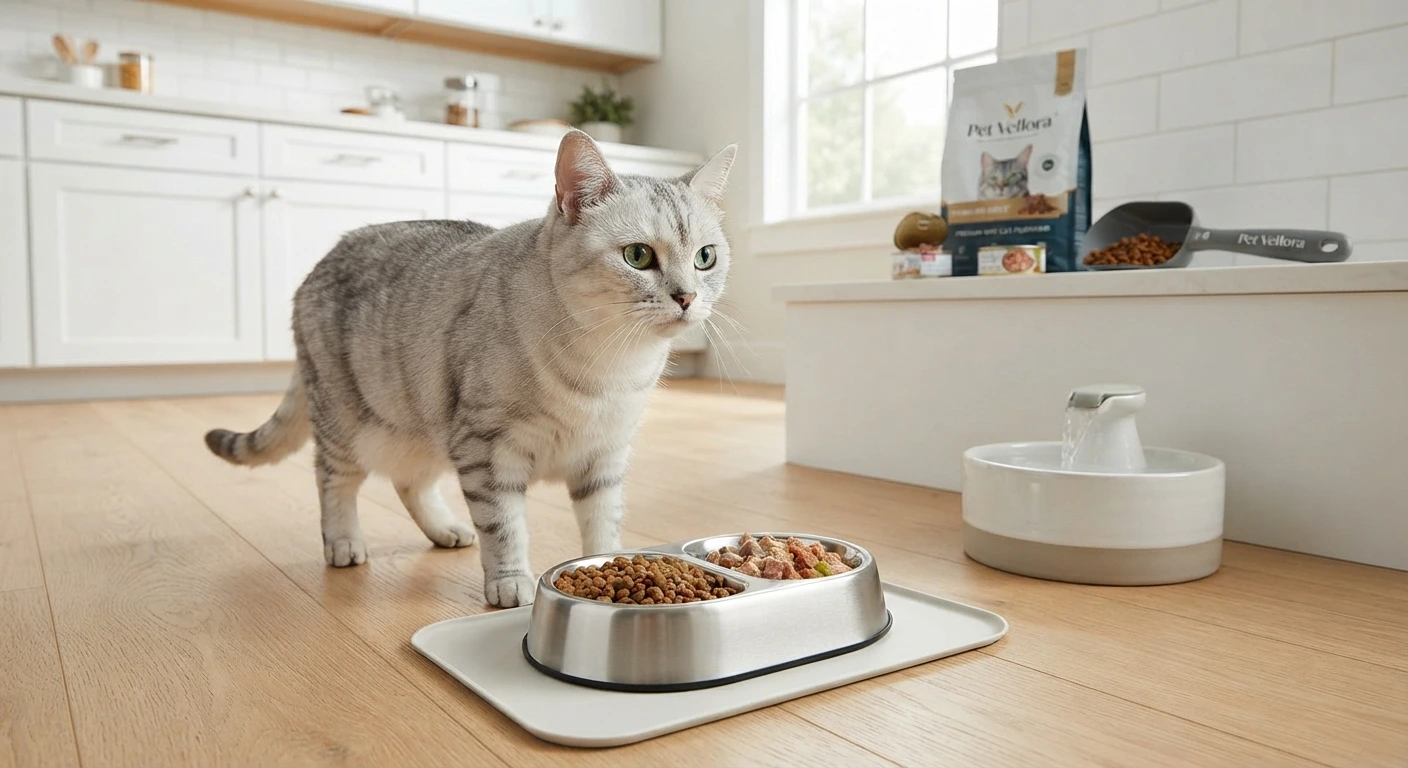
Yes, many cats can eat a combination of wet and dry food when both products are appropriate for their nutritional needs.
However, remember that combining two foods increases total calorie intake if portions are not adjusted.
Measure the combined daily amount rather than serving full portions of both foods.
4. How to Select Quality Cat Food
Check the food packaging before making a purchase.
Look for:
- Food specifically formulated for cats.
- A complete and balanced nutritional adequacy statement.
- The correct life stage.
- Feeding instructions.
- Calorie content.
- Clear manufacturer information.
Cats have nutritional requirements that differ from dogs. Never substitute dog food for a cat’s regular diet.
5. Why Fresh Water Is Important
Cats need regular access to clean water.
Some cats prefer drinking from wide bowls, while others enjoy pet water fountains.
Helpful tips:
- Wash water bowls frequently.
- Refill them with fresh water.
- Keep water away from dirty litter areas.
- Provide multiple water locations if needed.
- Monitor changes in drinking habits.
6. Tips for Changing Your Cat’s Food
Changing food suddenly may cause digestive upset in some cats.
A gradual transition over approximately 7–10 days is often a helpful approach for healthy cats:
- Days 1–2: Mostly old food with a small amount of new food.
- Days 3–4: Increase the new food.
- Days 5–6: Make the portions approximately equal.
- Days 7–10: Gradually move toward the new food if tolerated.
Adjust the transition if your cat has digestive symptoms. Cats that refuse food or have medical conditions need veterinary guidance rather than prolonged experimentation.
Conclusion
There is no single feeding method that works for every cat. Wet food, dry food, or a combination may all be suitable when they provide complete and balanced nutrition.
Understand your cat’s preferences, check food labels, maintain fresh water, and ask your veterinarian about individual dietary requirements.
PetVellora encourages every cat owner to make nutrition and everyday care a priority.