Introduction
Most dogs get excited when they hear the sound of a treat bag opening. Treats are a popular way to reward good behavior, support training, and strengthen the bond between pets and their owners.
However, giving too many treats can contribute to unwanted weight gain and an unbalanced diet.
The secret is choosing appropriate treats and serving them in moderation.
1. Why Are Dog Treats Useful?
Dog treats can serve several purposes.
Training rewards: Small treats can help reinforce positive behavior during training.
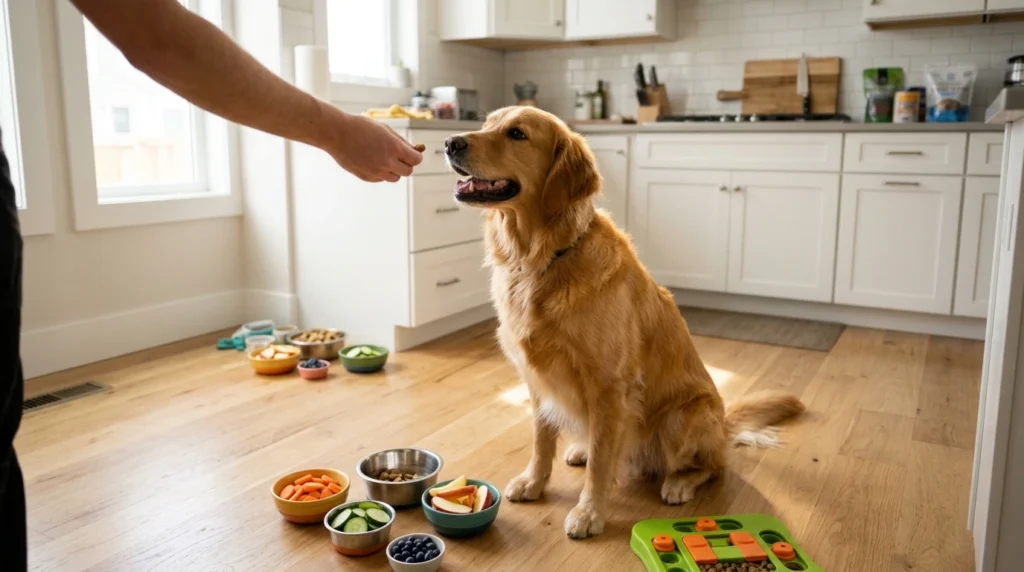
Mental enrichment: Treats can be hidden inside suitable puzzle toys to encourage problem-solving.
Bonding: Giving a suitable treat during positive interactions can help build trust.
Variety: Treats offer a different taste and texture from regular meals.
Remember that treats are not a replacement for complete and balanced dog food.
2. Dog-Friendly Snack Ideas
Some plain foods can be suitable occasional snacks for healthy dogs.
Examples include:
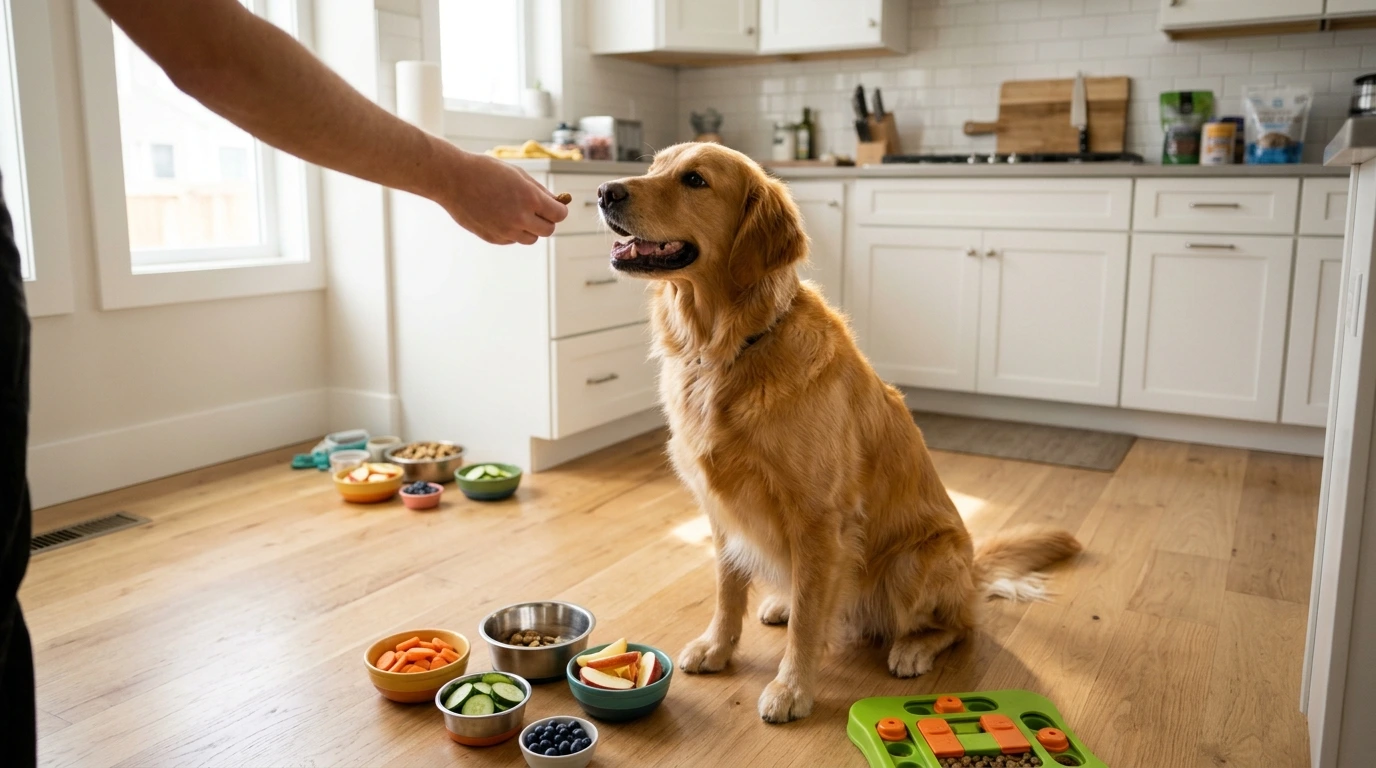
Carrots: Washed carrots cut into appropriately sized pieces can provide a crunchy snack.
Plain cucumber: Small pieces of plain cucumber can be a refreshing option.
Apple: Small pieces of apple without seeds or core can be offered occasionally.
Blueberries: A few washed blueberries can make a convenient small snack.
Plain cooked chicken: Boneless, skinless chicken without added seasoning can be suitable for many dogs.
Introduce new foods gradually and consider allergies, digestive sensitivities, and individual dietary restrictions.
3. How Many Treats Should Dogs Eat?
A widely used veterinary nutrition recommendation is to keep treats and other extras to no more than approximately 10% of a dog’s daily calories. The remaining calories should come from the dog’s nutritionally complete diet.
For example, a dog eating 500 calories daily should generally receive no more than about 50 calories from treats.
Individual calorie requirements vary, so ask your veterinarian for an appropriate target.
4. Foods Dogs Should Never Eat
Certain everyday foods can cause serious problems for dogs.
Avoid:
- Chocolate.
- Grapes and raisins.
- Onions and garlic.
- Xylitol-containing products.
- Alcohol.
- Macadamia nuts.
- Raw yeast dough.
- Caffeinated drinks.
Never assume that a food is safe simply because humans can eat it.
5. Choosing Commercial Dog Treats
When shopping for treats, consider:
- Your dog’s size.
- Age and chewing habits.
- Ingredient information.
- Calorie content.
- Texture and hardness.
- Manufacturer instructions.
Avoid excessively hard chews that may damage teeth. Supervise your dog when introducing new treats.
6. Use Treats for Positive Training
Treats can be useful during basic training.
For example:
- Ask your dog to sit.
- Wait for the correct behavior.
- Offer a small treat.
- Add verbal praise.
- Repeat the exercise.
Use small rewards to avoid adding too many calories.
Conclusion
Healthy treating habits are an important part of responsible dog ownership. Choose appropriate snacks, control portions, and avoid foods that are dangerous for dogs.
A little reward can make your dog’s day special without compromising a balanced diet.
At PetVellora, we believe every happy dog deserves thoughtful nutrition and plenty of love.