Introduction
Kittens bring happiness, energy, and excitement into a home. Their playful personalities make them wonderful companions, but caring for a growing kitten requires attention to nutrition, hygiene, and daily routines.
Proper nutrition during kittenhood supports growth and development. Choosing suitable kitten food is one of the first steps toward responsible cat ownership.
Let’s explore how to feed and care for a growing kitten.
1. Choose Specially Formulated Kitten Food
Kittens need different nutrient levels from adult cats.
Choose commercial cat food labeled complete and balanced for kitten growth or the appropriate life stage.
Kitten food should provide the nutrients and energy needed during development.
Do not assume adult cat food is suitable for a growing kitten.
2. How Often Should Kittens Eat?
Young kittens generally need several small meals throughout the day.
A practical starting point for many weaned kittens is:
- Young kittens: Around four small meals daily.
- Older kittens: Around three meals daily.
- Approaching adulthood: Gradually transition according to veterinary guidance and food instructions.
The exact amount depends on age, weight, food calories, and individual needs.
3. Wet Food or Dry Food for Kittens?
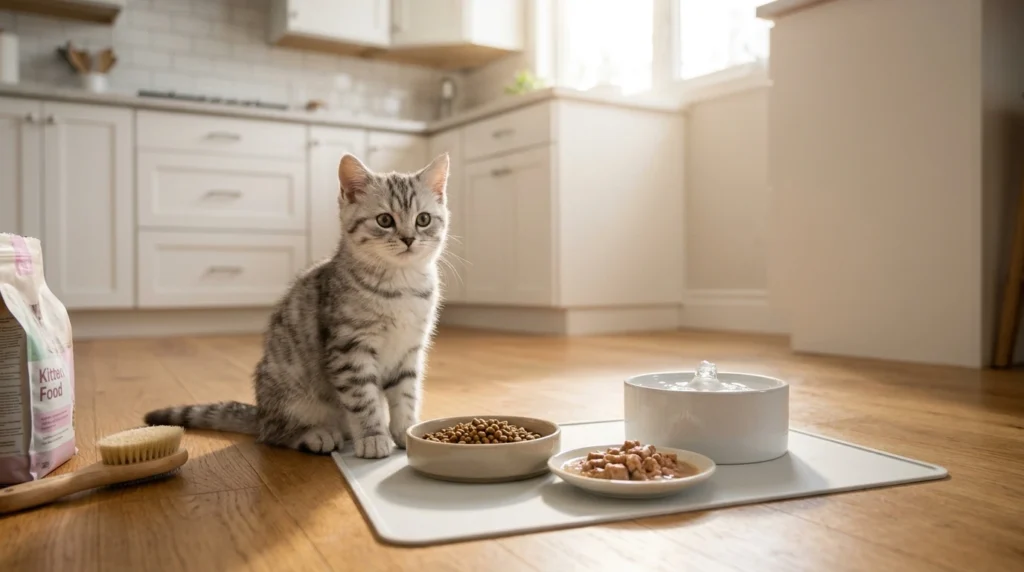
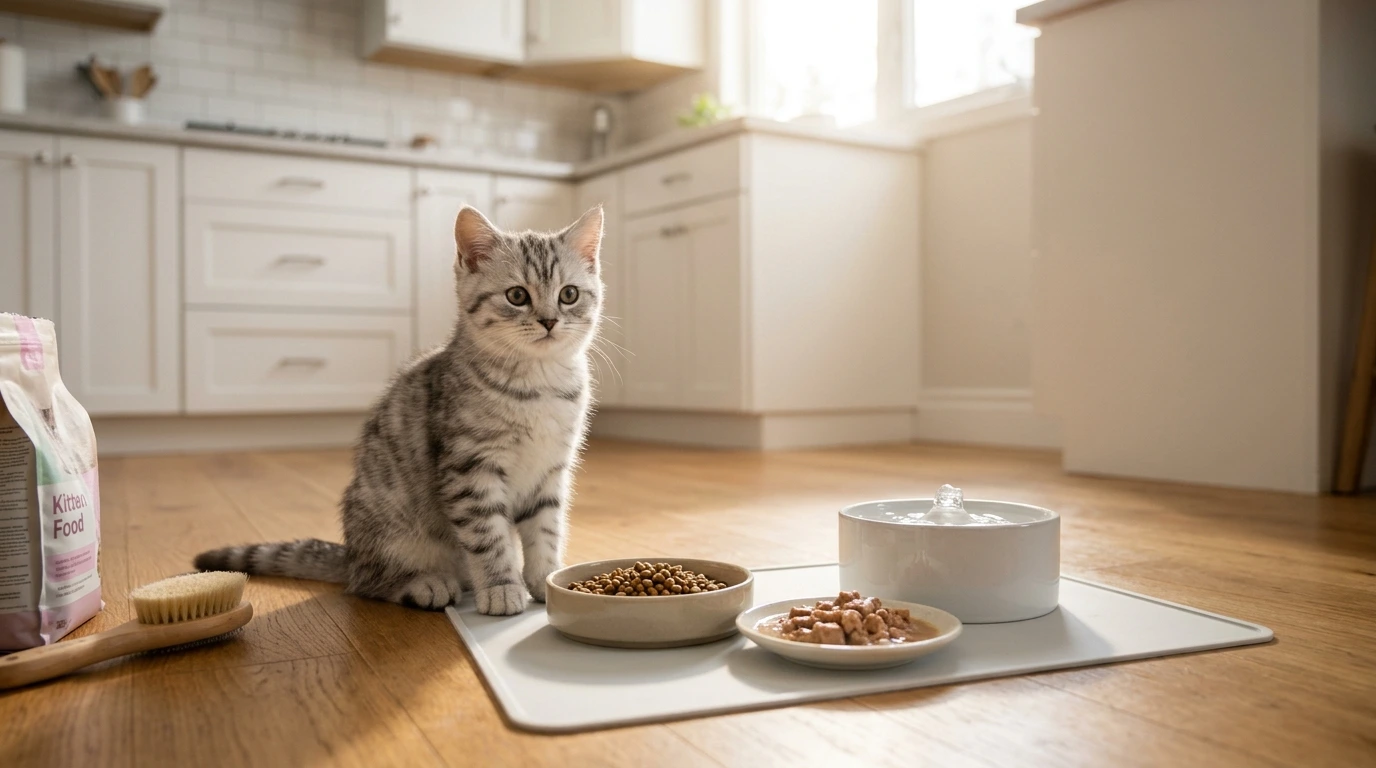
Both wet and dry kitten foods can provide appropriate nutrition when formulated for growth.
Wet food provides additional moisture and a soft texture.
Dry food is convenient to measure and store.
Some owners offer both, making sure the combined portions meet the kitten’s daily nutritional needs.
4. Provide Fresh Drinking Water
Always make clean water available.
Some kittens enjoy wide, shallow water bowls, while others prefer fountains designed for cats.
Wash water containers frequently and replace the water with fresh drinking water.
5. Introduce New Food Slowly
Kittens can be sensitive to sudden dietary changes.
When introducing a new food, gradually mix it with the existing food over approximately 7–10 days if appropriate.
Observe your kitten’s appetite and digestion.
If your kitten stops eating, experiences repeated vomiting, or develops diarrhea, contact a veterinarian.
6. Everyday Kitten Care Tips
Nutrition is only one part of kitten care.
Here are some additional habits to establish:
Clean litter box: Scoop regularly and keep the litter area clean.
Regular grooming: Gently brush your kitten using a suitable brush.
Dental care: Introduce gentle toothbrushing with cat-specific toothpaste when appropriate.
Playtime: Provide safe toys for chasing and exploring.
Veterinary visits: Follow your veterinarian’s vaccination, parasite prevention, and wellness recommendations.
7. Foods to Keep Away From Kittens
Avoid giving kittens:
- Chocolate.
- Onions and garlic.
- Grapes and raisins.
- Alcohol.
- Caffeinated drinks.
- Xylitol-containing products.
- Raw dough containing yeast.
Keep potentially dangerous foods out of reach.
Conclusion
A growing kitten needs proper food, fresh water, a clean environment, and plenty of attention.
Choose food specifically formulated for kitten growth, establish regular feeding habits, and provide appropriate veterinary care.
With patience and consistent care, you can help your kitten enjoy a healthy and happy start in life.
Explore PetVellora for more helpful pet care ideas and accessories.