Introduction
Rabbits are adorable, intelligent animals that make wonderful companions. However, keeping a rabbit healthy requires more than providing a comfortable cage and occasional treats.
A suitable diet is essential for rabbit health. Understanding the importance of hay, fresh vegetables, clean water, and appropriate pellets can help owners establish better feeding habits.
Here is a practical guide to rabbit nutrition and everyday care.
1. Hay Should Be the Main Part of a Rabbit’s Diet
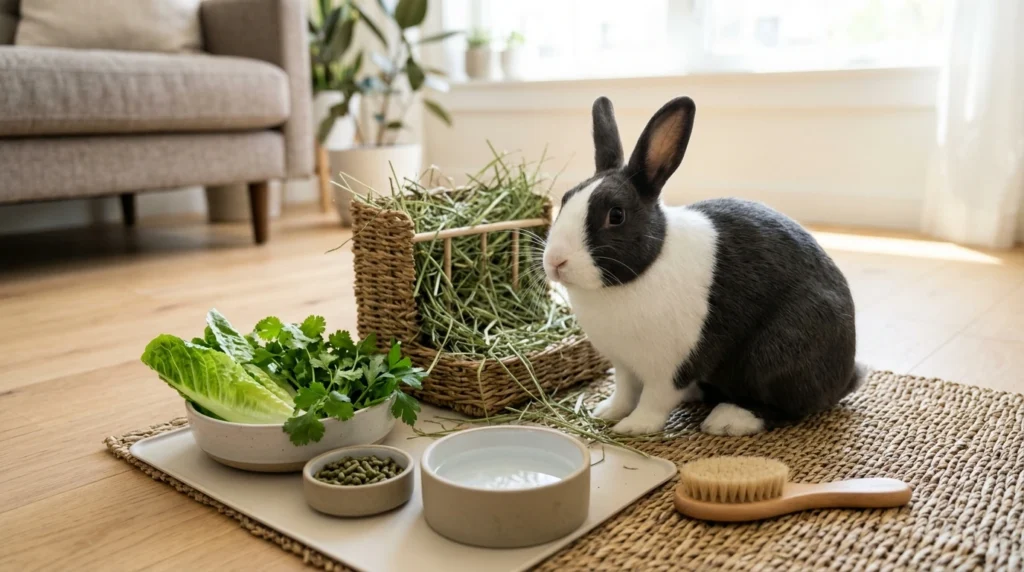
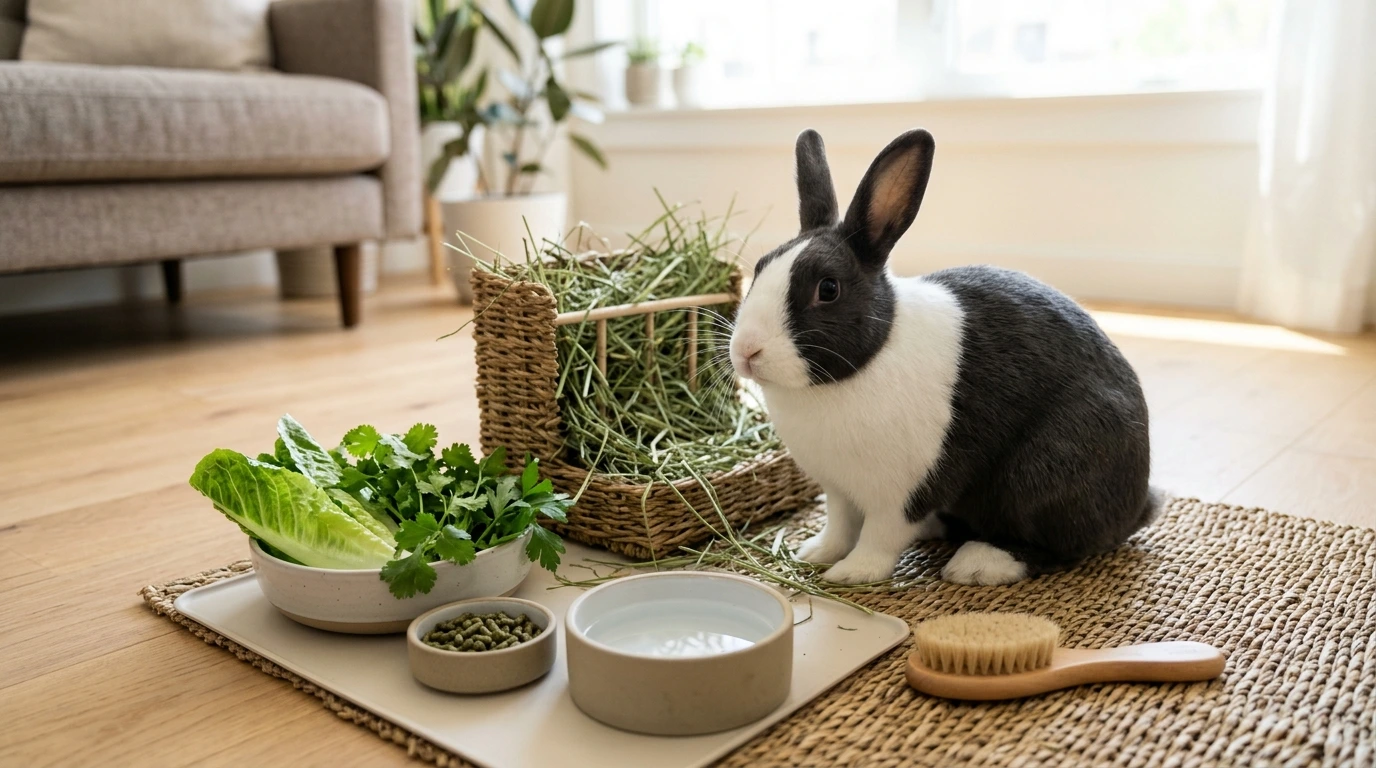
Grass hay is one of the most important foods for domestic rabbits.
It provides fiber that supports normal digestive function and helps wear down continuously growing teeth through chewing.
Examples of suitable grass hay include:
- Timothy hay.
- Orchard grass hay.
- Meadow hay.
- Oat hay.
Growing rabbits may have different hay requirements. Alfalfa hay is often used for young rabbits under appropriate feeding guidance, while adult rabbits generally benefit from grass hay.
Provide appropriate fresh hay throughout the day.
2. Introduce Fresh Vegetables
Many adult rabbits can enjoy a variety of leafy greens as part of a balanced diet.
Examples include:
- Romaine lettuce.
- Cilantro.
- Parsley.
- Green leaf lettuce.
- Small amounts of other rabbit-safe leafy greens.
Wash vegetables thoroughly and introduce new varieties gradually.
Avoid iceberg lettuce as a staple because it offers little nutritional value compared with more suitable leafy greens.
3. Choose Suitable Rabbit Pellets
Rabbit pellets can provide additional nutrients when selected and portioned appropriately.
Choose plain, high-fiber pellets formulated for rabbits rather than colorful mixes containing sugary pieces, seeds, or dried treats.
Select an appropriate formula for your rabbit’s age and health condition.
4. Can Rabbits Eat Fruits?
Some fruits can be offered as occasional treats in very small portions.
Examples include:
- Apple without seeds.
- Strawberries.
- Blueberries.
- Banana.
Fruit contains natural sugars, so it should not become a major part of the diet.
5. Foods Rabbits Should Avoid
Avoid giving rabbits:
- Chocolate.
- Candy.
- Bread and pastries.
- Sugary cereals.
- Processed snacks.
- Avocado.
- Large quantities of fruit.
- Foods containing artificial sweeteners.
Never make sudden changes to a rabbit’s diet.
6. Fresh Water Is Essential
Rabbits need continuous access to clean drinking water.
Provide a clean, appropriately sized water bowl or suitable bottle. Check the supply regularly and wash the container frequently.
7. Daily Rabbit Care Tips
A healthy rabbit routine includes more than feeding.
Exercise: Provide daily opportunities to move around in a safe, spacious area.
Grooming: Brush your rabbit regularly, especially during shedding periods.
Clean living space: Remove soiled bedding and clean the enclosure regularly.
Dental monitoring: Rabbits’ teeth grow continuously, so watch for difficulty chewing or changes in eating habits.
Veterinary care: Schedule regular checkups with a veterinarian experienced in rabbit care.
Conclusion
A healthy rabbit diet begins with suitable grass hay, appropriate leafy vegetables, carefully portioned pellets, and fresh water.
Avoid sugary treats and sudden food changes. Monitor your bunny’s appetite and behavior, and seek veterinary attention if your rabbit stops eating or producing droppings.
At PetVellora, we believe every little bunny deserves proper nutrition, comfort, and loving care.